Business plan: what it is, the sections the SBA lists, and traditional vs. lean format
What a business plan is, the nine sections the SBA describes, when a one-page lean plan is enough, and what BLS data shows: 50.7% of 2016 openings lasted five years.
In this article
A business plan is the document that says what a company will do, how it will sell and how much money it needs to get there. The U.S. Small Business Administration (SBA) describes it as a guide through each stage of starting and managing a business, and as a tool that can help you get funding or bring on new partners. The odds it is written against are public: the Bureau of Labor Statistics (BLS) reports that 50.7% of private establishments opened in the year ended March 2016 were still operating five years later.
Key points
- The SBA sorts most plans into two formats: traditional, with a standard structure that can run dozens of pages, and lean startup, which is typically one page.
- Lenders and investors commonly request the traditional plan, where the funding request and the financial projections cover the next five years.
- According to the SBA, a break-even analysis is usually a requirement to take on investors or debt.
- Market sizing starts with a count of competitors: in Mexico's DENUE directory, personal care businesses in Jesús María, Aguascalientes, went from 95 in 2010 to 267 in 2025.
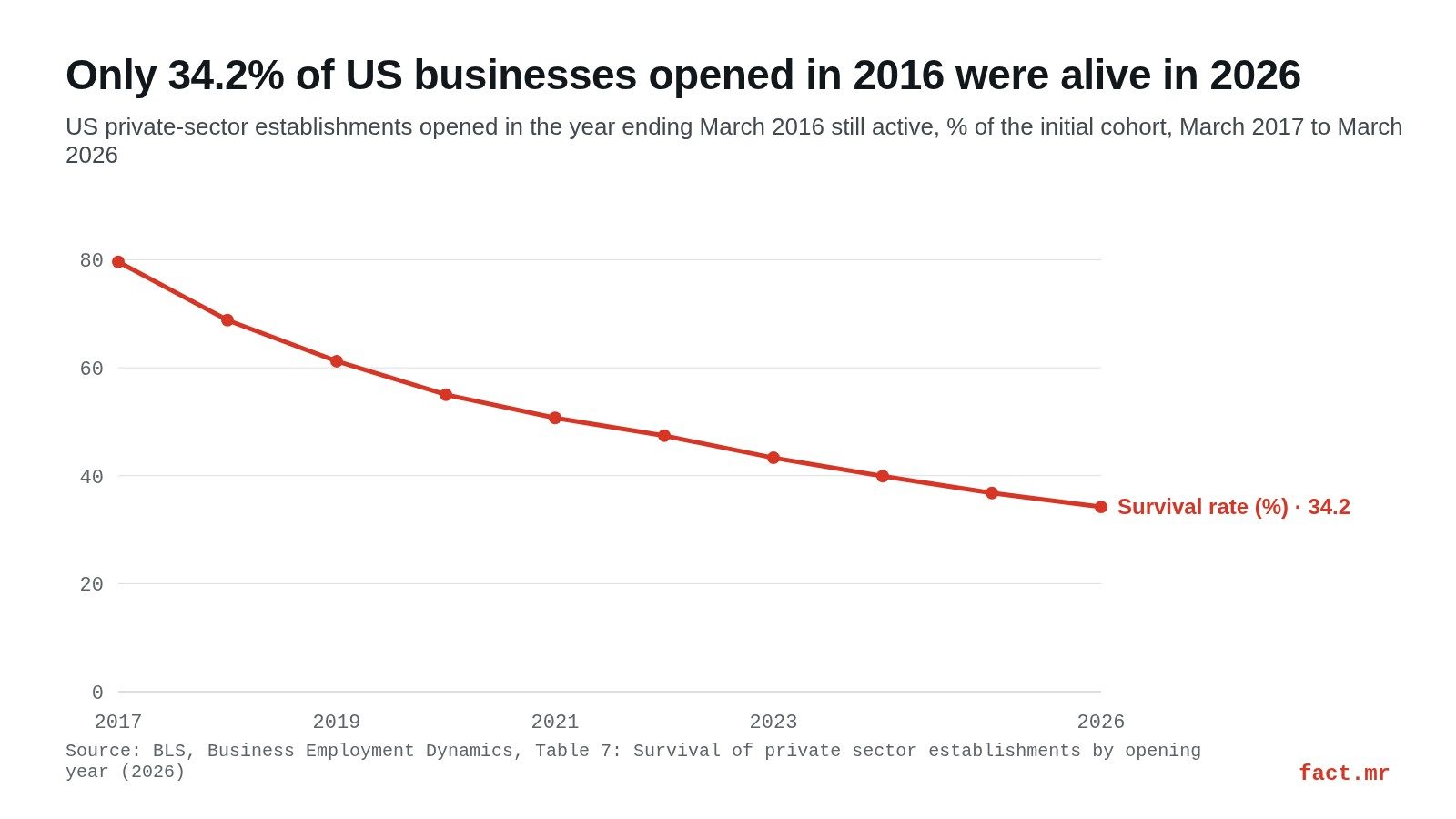
- Of US private establishments opened in the year ended March 2016, 50.7% survived five years and 34.2% reached 10 years, per the BLS.
What a business plan is and where its structure comes from
A free, public reference is the SBA's "Write your business plan" guide1, published by the federal agency for small businesses. Its stance is relaxed (refreshingly so for a government page): there is no right or wrong way to write a business plan, as long as it meets the needs of the person writing it.
That flexibility has a limit. The document usually has two readers: the founder, who uses it as a guide to start and run the business, and the lender, investor or future partner deciding whether to put money or time into it.
Two formats: traditional and lean startup
Do you need the long version or the one-pager? The SBA's answer depends on who will read it, and the table sums up how its guide separates the two.
| Feature | Traditional plan | Lean startup plan |
|---|---|---|
| Length | Can be dozens of pages long | Typically one page |
| Effort | Requires more work upfront | Can take as little as one hour |
| Structure | Standard, with nine common sections and detail in each | Nine short components |
| When it fits | The more common format, and the one lenders and investors commonly request | When you want to explain or start the business quickly, the business is relatively simple, or you plan to change and refine the plan often |
How to write a business plan, step by step
The SBA's guide walks through nine common sections of the traditional plan and offers fictional sample plans to download. Among them, as the guide describes them:
- Executive summary. What the company is and why it will be successful, including the mission statement, product or service, leadership team, employees and location.
- Organization and management. How the company will be structured, who will run it and what its legal structure is (an org chart covers half of this section in one image).
- Marketing and sales. How you will attract and retain customers, and how a sale will actually happen.
- Funding request. How much funding you will need over the next five years and what you will use it for.
- Financial projections. A prospective outlook for the next five years, with quarterly or even monthly projections for the first year. An established business adds income statements, balance sheets and cash flow statements for the last three to five years.
Startup costs
The SBA places most businesses in one of three categories when it comes to startup costs: brick-and-mortar businesses, online businesses and service providers. It asks you to sort expenses into one-time and monthly costs, and to count at least one year of monthly expenses (five years is ideal).
Break-even point
The break-even point is where total cost and total revenue are equal, with neither loss nor profit. The SBA gives two formulas: fixed costs ÷ (price − variable costs) for units, and fixed costs ÷ contribution margin for sales dollars. Fixed costs are the ones that do not change with output, such as rent, salaries, property taxes, insurance, interest and depreciation.
Example with round numbers (not real data): fixed costs of $6,000, a price of $50 and a variable cost of $30 per unit. Break-even is 6,000 ÷ (50 − 30) = 300 units; with a contribution margin of (50 − 30) ÷ 50 = 0.40, break-even sales come to 6,000 ÷ 0.40 = $15,000. The SBA suggests adding a little extra, say 10%, for miscellaneous expenses you can't predict.
Worked example: sizing a local market with Mexico's DENUE
The market section of a plan comes down to a blunt question: how many businesses like yours already operate in your area? Mexico answers it with a free official directory, the DENUE (National Statistical Directory of Economic Units), run by INEGI, the country's national statistics agency. It reports the location, economic activity and size by headcount of active establishments in every sector except agriculture3.
INEGI calls the DENUE a key tool for market studies and for helping entrepreneurs choose where to open, and its DENUE 05/2026 release counted 6 138 075 establishments in Mexico.
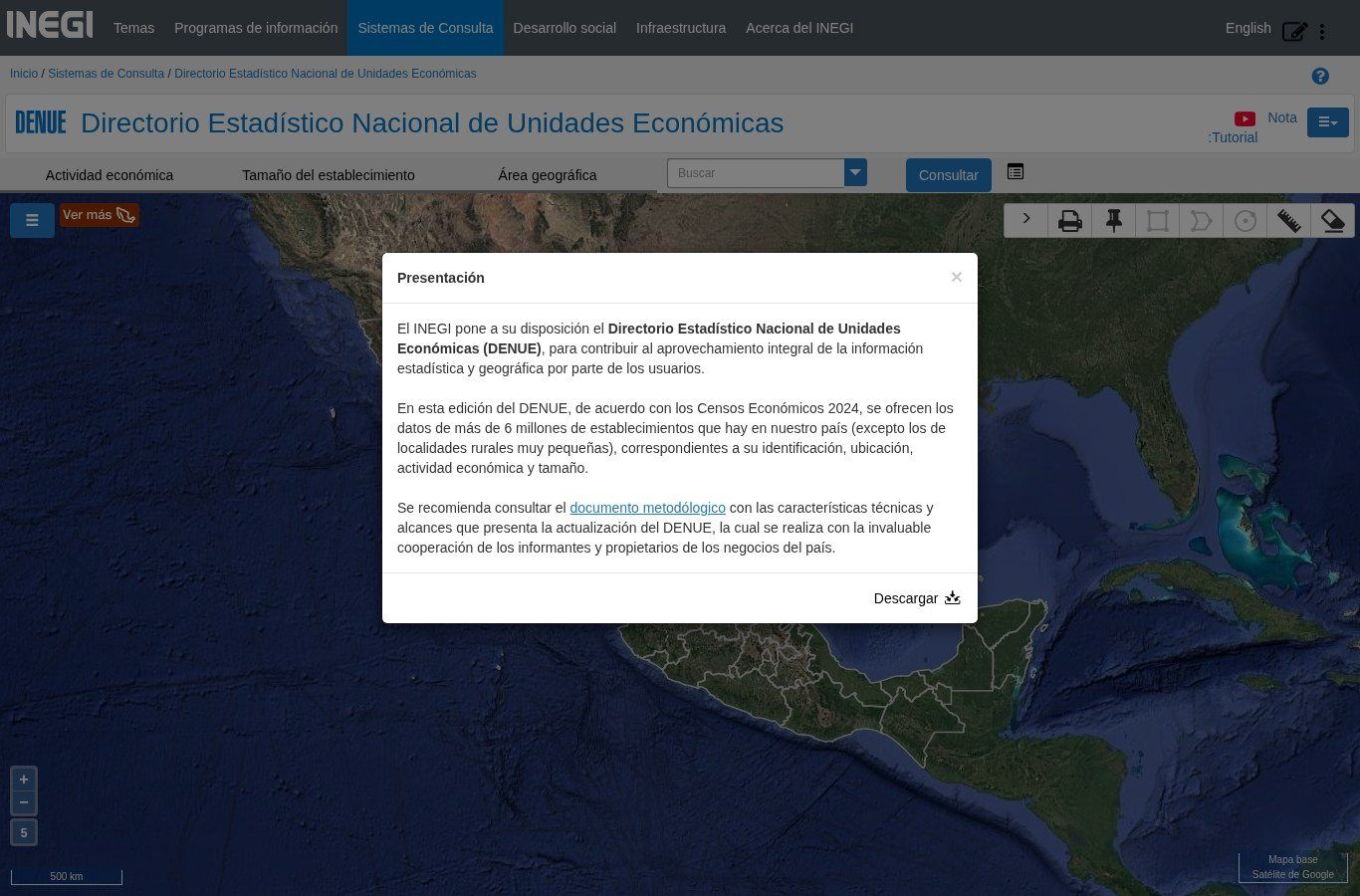
A query combines three filters, matching what INEGI says the directory reports (location, economic activity and size)3:
- Economic activity: barbershops, beauty salons and other personal care services.
- Geographic area: the municipality of Jesús María, in the state of Aguascalientes.
- Establishment size: the headcount bracket, to separate small shops from chains.
INEGI published the result of this kind of search in its DENUE 05/2026 release: personal care establishments in Jesús María went from 95 in 2010 to 267 in 2025. That is 172 more businesses, an increase of about 181.1%.
| DENUE figure | Value |
|---|---|
| Personal care establishments in Jesús María, 2010 | 95 |
| Personal care establishments in Jesús María, 2025 | 267 |
| Change, 2010-2025 | 172 (≈ +181.1%) |
| Auto parts manufacturing establishments in Mexico | 2 229 |
The same directory finds suppliers as well as competitors: INEGI counts 2 229 auto parts manufacturing establishments in Mexico and describes them as potential suppliers. And the tool gets heavy use, with 1 089 068 visits in 2025 and a monthly average of 92 641 between January 2025 and April 2026.
But the DENUE does not measure sales.
The count tells you who the competition is and where it sits, and the plan still has to estimate how many customers each location can serve. For the size of those competitors, Mexico's 2024 Economic Censuses4 help: in 2023, microbusinesses (10 people or fewer) were 95.4% of private and state-owned units and employed 41.4% of their workers, while large units were 0.2% of units and employed 28.7%. The same censuses classified 64.3% of those units as informal in 2023, up from 62.6% in 2018, a rise of 1.7 percentage points.
When a business plan helps and when it doesn't
The traditional format makes sense when someone is going to ask for it, and the SBA says lenders and investors commonly do. What a plan cannot fix is a credit record: the SBA names poor credit history as one of the main reasons small business loan applications are declined. If the plan will change every few weeks, the lean startup format sits closer to the iterative logic of agile and Scrum.
Survival data puts the plan in context. The BLS follows each cohort of US private establishments from its opening year2: of the 732,856 opened in the year ended March 2016, 371,334 were still operating in March 2021, or 50.7%. The chart above traces that cohort year by year, from 79.6% after one year to 61.2% after three, 39.9% after eight and 34.2% after 10.
| Opening cohort (year ended March…) | Five-year survival |
|---|---|
| 1996 | 48.1% |
| 2001 | 48.1% |
| 2006 | 45.4% |
| 2011 | 50.9% |
| 2016 | 50.7% |
| 2021 | 47.2% |
The latest cohort with one-year data opened in the year ended March 2025: 976,437 establishments, of which 78.9% were still open in March 2026. The BLS does not record how many of those businesses had a written plan, so the curve says nothing about whether planning improves the odds.
Common mix-ups
Lean startup plan vs. traditional plan
The nine components the SBA lists for a lean startup plan are key partnerships, key activities, key resources, value proposition, customer relationships, customer segments, channels, cost structure and revenue streams. The list is a set of boxes to fill rather than chapters to write. The traditional plan adds what that single page leaves out: five-year projections and a funding request.
DENUE vs. Mexico's Economic Census
Both come from INEGI, and they give different totals. The 2024 Economic Censuses, the twentieth edition of a count held every five years since 1930, found 7 093 631 establishments in 2024, with 36 592 279 workers and 242 679 that started operations that year; the DENUE 05/2026 lists 6 138 075. The censuses produce economic indicators with variables referring to 2023, while the DENUE is a directory for locating establishments.
Break-even point vs. financial projections
Break-even is a threshold: it tells you how many units or how much in sales covers your costs. Projections are a five-year path, and the SBA asks for both. To tell an official count apart from an industry report with shaky origins, see this guide on how to read industry reports.
The BLS cohort opened in the year ended March 2026 counts 969,316 establishments, and the table does not yet carry a single survival figure for it.
Frequently asked questions
What are the parts of a business plan?
The SBA describes nine common sections in a traditional plan. They include the executive summary, organization and management, marketing and sales, the funding request and financial projections, the last two covering five years. The lean startup format condenses everything into nine components on a single page, from value proposition to revenue streams.
How long should a business plan be?
There is no official page count. According to the SBA, a traditional plan can be dozens of pages long and takes more work upfront, while a lean startup plan is typically one page and can take as little as one hour. If a lender or investor will read it, the traditional format is the one they commonly request.
Do I need a business plan to get a small business loan?
The SBA says lenders and investors commonly request a traditional plan, and that a break-even analysis is usually a requirement to take on investors or debt. The plan does not offset a weak credit record, which the SBA lists among the main reasons small business loan applications are declined.
How many new businesses survive five years?
In the US, the BLS reports that 50.7% of private establishments opened in the year ended March 2016 were still operating in March 2021, and 34.2% after 10 years. For the cohort opened in the year ended March 2021, five-year survival was 47.2%, according to Table 7 of Business Employment Dynamics.
Sources
- U.S. Small Business Administration (SBA), "Write your business plan" (online guide). Traditional and lean startup formats, plan sections, startup costs, break-even point and credit history. sba.gov. Accessed Oct 19, 2026.
- U.S. Bureau of Labor Statistics (BLS), "Business Employment Dynamics, Table 7. Survival of private sector establishments by opening year" (2026). Establishments opened and survival rates by opening cohort. bls.gov. Accessed Oct 19, 2026.
- INEGI, "Directorio Estadístico Nacional de Unidades Económicas, DENUE 05/2026," press release (2026). Establishments in Mexico, uses of the directory, the Jesús María and auto parts examples, and visits. inegi.org.mx. Accessed Oct 19, 2026.
- INEGI, "Censos Económicos 2024: resultados definitivos," press release (2025). Establishments, employment, size of economic units and informality. inegi.org.mx. Accessed Oct 19, 2026.
- INEGI, "DENUE: map search" (online tool). Filters by economic activity, establishment size and geographic area. inegi.org.mx. Accessed Oct 19, 2026.
Chart: our own, with data from BLS, Business Employment Dynamics (source 2).
Photo: our own screenshot of inegi.org.mx, Oct 28, 2026.
fact.mr is not affiliated with consulting firms with similar names.
Found an error? Write to us at [email protected].