PESTEL analysis: what it is, the six factors, a template and a copper example
What a PESTEL analysis is, the six factors and a fill-in template, plus a worked copper example with World Bank, USGS, IEA and EU data in every cell.
In this article
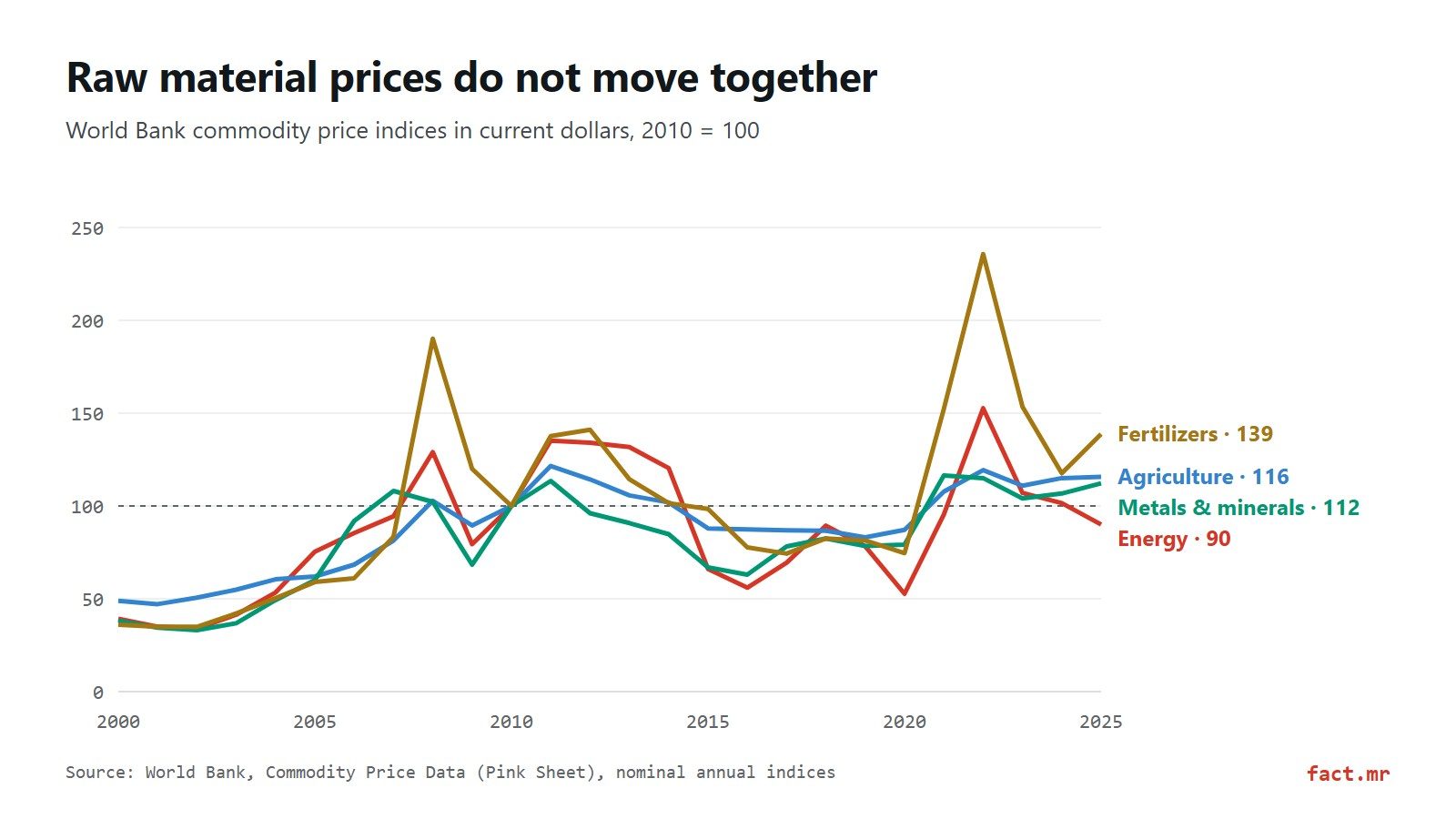
A PESTEL analysis is a template for reviewing the outside environment of a company, an industry or a product across six factors: political, economic, social, technological, environmental and legal. It only works when every cell carries a specific question and a data point with a source and a date. One economic example: the World Bank's October 2026 Commodity Markets Outlook says commodity prices are set to rise 23% in 2026.
Key points
- PESTEL sorts six outside factors. PEST analysis is the short version, without the E for environmental and the L for legal.
- Each factor needs a question and a sourced figure. Without them, the table turns into a generic checklist.
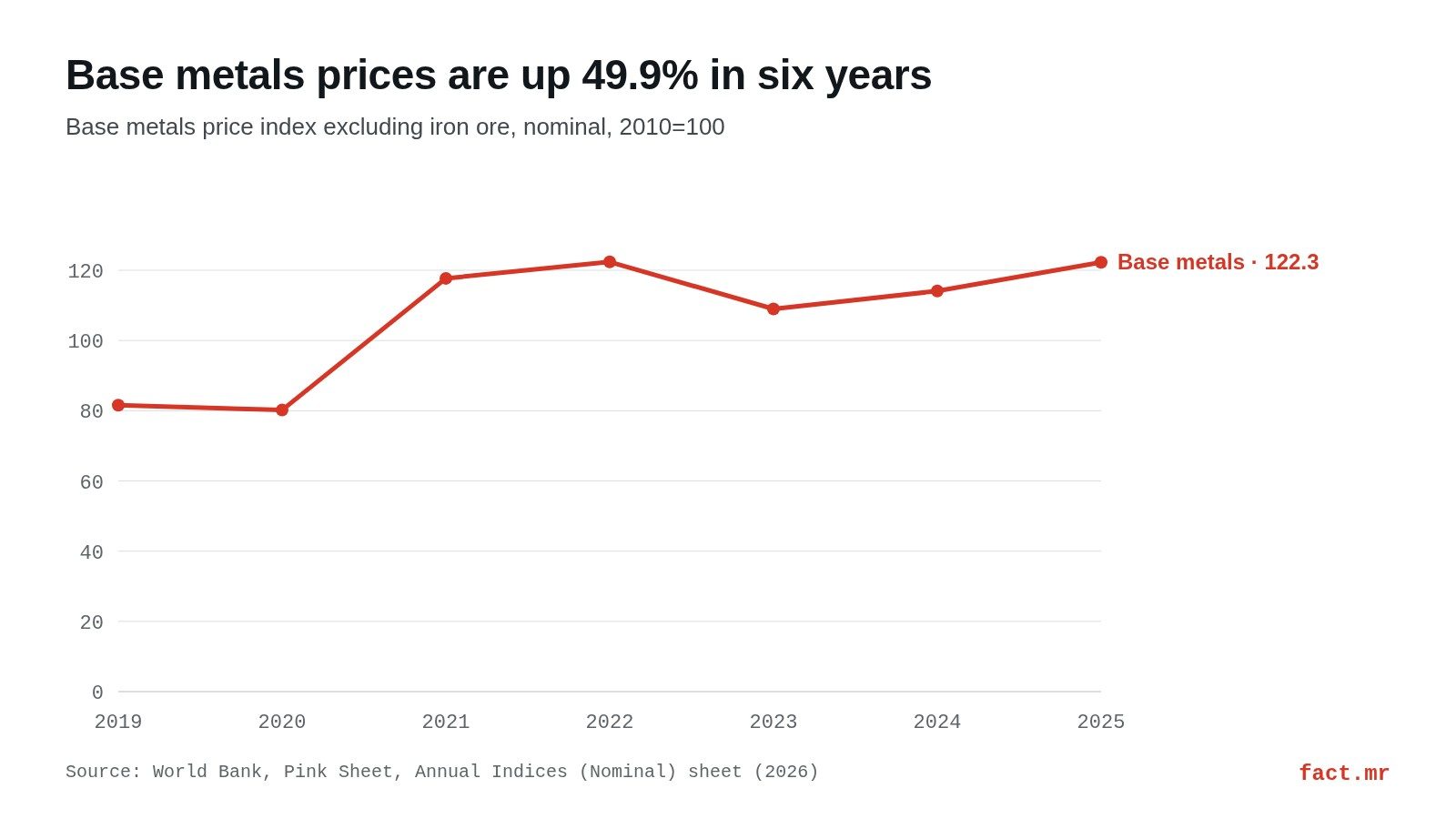
- In the copper example, the World Bank's base metals index went from 81.6 in 2019 to 122.3 in 2025 (2010=100).
- In its STEPS scenario, the IEA projects copper demand to grow 30% through 2040 and sees an implied mined-supply deficit of 30% in 2035.
- The EU's Critical Raw Materials Act sets a 27-month timeline for extraction permits on selected strategic projects.
What a PESTEL analysis is
It maps the forces outside a business that the business cannot control: governments, prices, population, technology, the environment and regulation. Analysts build one before drafting a business plan, before entering a new market, or when sizing up the risk of relying on a single input.
The output feeds other tools. Most of the opportunities and threats in a SWOT analysis come out of a well-built PESTEL.
The usual failure is a template full of sentences that fit any industry, such as "inflation affects consumer spending" or "technology changes fast." Swap in a different industry and the sentence still holds, and that means it tells the reader nothing.
The six factors, letter by letter
Six letters, six questions. Write the question before you look for data, because the question decides which source is useful.
| Letter | Factor | What it asks | Where to find the data |
|---|---|---|---|
| P | Political | Which government decisions change supply, trade or investment? | Federal Register (US), UK government publications, European Commission |
| E | Economic | How are prices, costs and demand moving in the industry? | World Bank, Bureau of Economic Analysis, BLS, central banks |
| S | Social | How many people depend on the activity, and what is changing among buyers? | Census Bureau, BLS, ONS (UK) |
| T | Technological | Which uses support demand, and what technology is changing production? | Geological surveys such as the USGS, technical agencies, IEA |
| E | Environmental | What is the activity's environmental footprint, and how much can recycling replace? | IEA, EPA, environmental agencies |
| L | Legal | Which rules in force set targets, deadlines or permits? | Official legal texts, European Commission, industry regulators |
So where does P end and L begin? The line is blurry (the Critical Raw Materials Act is industrial policy and law at the same time, which does not help), so the only firm rule is to never count one fact twice. In practice, the government decision goes under P, and the binding rule with deadlines and targets goes under L.
PESTEL analysis template
This template has five columns, and the last two are the ones most tables leave out. A 2021 figure in a table built in 2026 has to say it is from 2021.
| Factor | Specific question | Data (figure, source, year) | Effect on your case | Time horizon |
|---|---|---|---|---|
| Political | One question, about your product or your country | A figure with its agency and its year | Raises or lowers risk, and why | Months or years |
| Economic | Price, cost or demand of the main input | Official series, with unit and base year | Effect on margin or sales | Months or years |
| Social | Jobs, population or habits that affect you | Official survey or register | Effect on demand or hiring | Years |
| Technological | Growing uses or technology that changes supply | Technical report from a public agency | Effect on product or process | Years |
| Environmental | Footprint, recycling or environmental targets | Public agency data | New cost or requirement | Years |
| Legal | Rule in force with deadlines or targets | Article or official page of the rule | Obligation, deadline or permit | Date set by the rule |
Example: a PESTEL analysis of copper, one question per factor
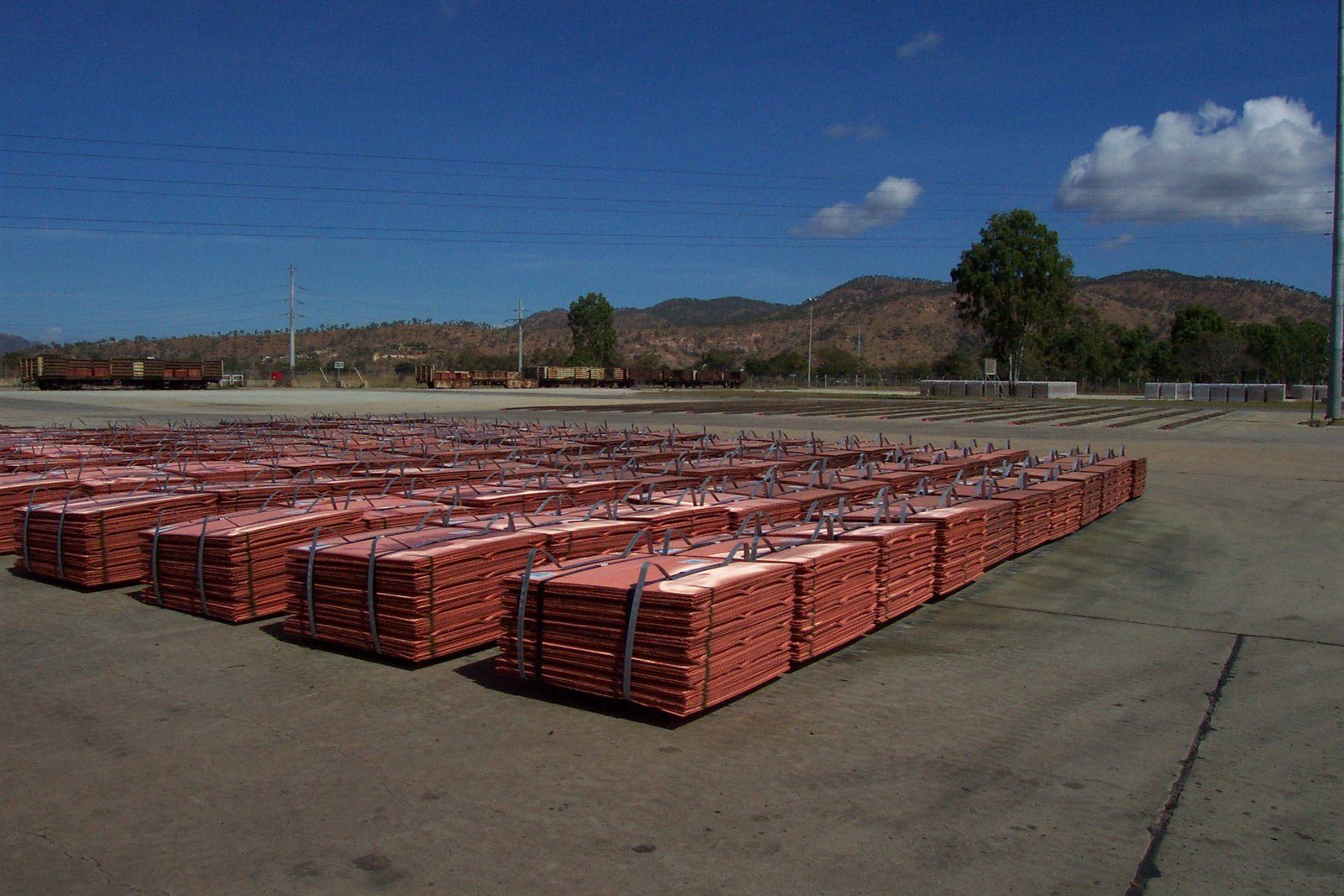
Copper makes a good test case because it matters to plenty of businesses that never mine it, such as cable makers and electrical contractors. The USGS National Minerals Information Center ranks it third among metals by quantities consumed, after iron and aluminum. The World Bank's Pink Sheet tracks the LME price of grade A copper, minimum 99.9935% purity, in cathodes and wire bar shapes.
Political: who controls supply, and what are governments doing?
The European Commission defines critical raw materials as those of high economic importance to Europe that are also highly vulnerable to supply disruptions. Its Critical Raw Materials Act sets a 2030 benchmark of no more than 65% of the EU's annual consumption coming from any single third country. The IEA shows how far concentration can go in other minerals: China is set to supply over 60% of refined lithium and cobalt in 2035.
None of those percentages refer to copper. But they show what can happen: in 2010, according to the IEA, the price of rare earth elements spiked by as much as ten times when China held back exports. On the producer side, Mexico's Ministry of Economy cites the Fraser Institute, which in 2021 ranked Mexico sixth in Latin America and 34th worldwide in its Investment Attractiveness Index.
Economic: how far did the price move, and what does the latest report say?
| Year | Base metals index, excluding iron ore (nominal, 2010=100) |
|---|---|
| 2019 | 81.6 |
| 2020 | 80.2 |
| 2021 | 117.7 |
| 2022 | 122.4 |
| 2023 | 109 |
| 2024 | 114.1 |
| 2025 | 122.3 |
According to the Annual Indices (Nominal) sheet of the Pink Sheet, the index rose 49.9% between 2019 and 2025. The sharpest jump came from 2020 to 2021, at 46.8%, and the only steep drop came from 2022 to 2023, at 10.9%. In prices published on November 3, 2026, the World Bank reported that metals fell 3.0% in October while the energy price index rose 7.1%.
The October 2026 Commodity Markets Outlook expects metal and mineral prices to reach an all-time peak in 2026, with aluminum, copper and tin at record highs. One catch: the index bundles several base metals, so a cell about copper alone should use the Pink Sheet's own copper series.
Social: how many people depend on the activity?
For a US or UK buyer, the social cell usually points to producing countries, and Mexico is a useful one to check. Its Ministry of Economy, citing IMSS (Mexico's social security institute), reported that direct mining jobs at the end of 2021 were up 10.4% from 2020. The same official page gives two figures for the sector's weight in the economy: one says 2.05% of national GDP with no reference year, while another, based on data from INEGI (Mexico's statistics agency), gives 8.6% of industrial GDP and 2.5% of national GDP in 2021.
The page says nothing about disputes with mining communities, which is the other half of this cell.
Technological: which uses support demand?
According to the USGS, electrical uses account for about three quarters of total copper use. Building construction is the single largest market, followed by electronics and electronic products. The IEA's Global Critical Minerals Outlook 2025 projects in its STEPS scenario that copper demand will grow 30% through 2040.
And the IEA calculates an implied deficit of 30% in mined copper supply in 2035. It attributes the gap to declining ore grades, rising project costs and a sharp slowdown in new resource discoveries.
Environmental: how much can recycling contribute?
The USGS notes that copper byproducts from manufacturing and obsolete copper products are readily recycled and contribute significantly to supply. The IEA estimates that recycled energy transition minerals, with nickel, cobalt and lithium as its examples, produce 80% less greenhouse gas emissions on average than primary materials. The Critical Raw Materials Act sets a 2030 benchmark for recycling to cover at least 25% of the EU's annual consumption.
Legal: what deadlines does the rule set?
The same EU law sets 2030 benchmarks of at least 10% of annual consumption for extraction and 40% for processing. For selected strategic projects, permits come with timelines of 27 months for extraction and 15 months for processing and recycling.
The Commission has assessed raw materials for criticality since 2011, updates its list every three years and analyzed 87 materials in 2023 (whether copper is on the current list is something to confirm on the official list, never in a third-party guide).
The copper PESTEL in one table
| Factor | Question | Data | Source |
|---|---|---|---|
| Political | Who controls supply? | Cap of 65% of EU consumption from a single third country (2030 benchmark) | European Commission |
| Economic | How far did the price move? | Base metals index: 81.6 in 2019, 122.3 in 2025 | World Bank |
| Social | How many jobs depend on the sector? | Direct mining jobs in Mexico up 10.4% at the end of 2021 versus 2020 | Mexico's Ministry of Economy (IMSS) |
| Technological | Which uses support demand? | Electrical uses: about three quarters of the total | USGS |
| Environmental | How much does recycling contribute? | Benchmark of 25% of EU consumption from recycling by 2030 | European Commission |
| Legal | What deadlines does the rule set? | 27 months for extraction permits on strategic projects | European Commission |
From the table to a decision
Example: a small US manufacturer of electrical wire. For that company, the economic cell weighs more than the European legal one, and the technological cell plays out over years.
The useful step is to mark each row as raising or lowering risk, then keep the two rows that move cost or sales the most. Those two go into the SWOT as threats or opportunities. The other four stay as dated context, to be checked at the next update.
When the PESTEL is part of a study on inputs, the guide to raw materials and how their prices move gives the economic cell more context.
Common mix-ups
PEST, PESTLE and PESTEL
All three names describe the same tool. PEST drops the environmental and legal factors, and PESTLE just reorders the letters. The acronym you pick matters less than leaving no cell empty.
PESTEL and SWOT
A PESTEL looks only outward. A SWOT crosses that environment with internal strengths and weaknesses, so a line about "our sales team" belongs in no PESTEL cell.
Mixing indices that have little in common
The World Bank's precious metals index rose 43.5% between 2024 and 2025, from 180.2 to 258.6. That move says nothing about copper, which sits in the base metals index.
The indices in this guide come from the current Pink Sheet, and the World Bank has scheduled its next update for December 2, 2026.
Frequently asked questions
What is the difference between a PEST and a PESTEL analysis?
A PEST analysis covers political, economic, social and technological factors. A PESTEL adds environmental and legal ones. In the copper example, the legal cell holds the Critical Raw Materials Act timelines: 27 months for extraction permits and 15 months for processing and recycling on selected strategic projects.
How often should a PESTEL analysis be updated?
That depends on the slowest and the fastest sources in the table. The World Bank's Pink Sheet publishes prices every month, with the next update on December 2, 2026. The European Commission reviews its critical raw materials list every three years, as it has done since 2011.
Which free sources work for a PESTEL on a raw material?
The USGS National Minerals Information Center covers supply, demand and flows for each mineral commodity, and the World Bank's Pink Sheet covers prices. For demand outlooks, the IEA's Global Critical Minerals Outlook 2025 is public, and for producing countries such as Mexico, government pages list positions like tenth place worldwide in copper.
Can you run a PESTEL on a commodity instead of a company?
Yes, and the result is often more concrete, because every cell has public data series. The USGS ranks copper as the third most consumed metal, and the World Bank's base metals index went from 81.6 in 2019 to 122.3 in 2025, with 2010=100.
Sources
- World Bank, "Commodity Markets" (October 2026 Commodity Markets Outlook and prices published November 3, 2026). Expected rise in commodity prices in 2026, metal price peaks, October changes and next update date. worldbank.org. Accessed Nov 4, 2026.
- World Bank, "CMO-Historical-Data-Annual.xlsx", Annual Indices (Nominal) sheet (2026). Annual base metals and precious metals indices, and definition of the copper price series. thedocs.worldbank.org. Accessed Nov 4, 2026.
- U.S. Geological Survey, National Minerals Information Center, "Copper Statistics and Information". Copper's rank by consumption, electrical uses, end markets and recycling. usgs.gov. Accessed Nov 4, 2026.
- European Commission, "Critical Raw Materials Act". Definition of critical raw materials, 2030 benchmarks, permit timelines and criticality assessments. single-market-economy.ec.europa.eu. Accessed Nov 4, 2026.
- International Energy Agency (IEA), "Global Critical Minerals Outlook 2025: Overview of outlook for key minerals" (2025). Copper demand and supply deficit in the STEPS scenario, refining concentration, the 2010 rare earth price spike and recycling emissions. iea.org. Accessed Nov 4, 2026.
- Mexico's Ministry of Economy (Secretaría de Economía), "Minería". Mining's share of GDP, employment, Mexico's rank in copper production and the Fraser Institute index. gob.mx. Accessed Nov 4, 2026.
Chart: our own, with data from World Bank, Pink Sheet, Annual Indices (Nominal) sheet (source 2).
Photo: ChrisFountain (CC BY-SA 3.0, Wikimedia Commons).
fact.mr is not affiliated with consulting firms with similar names.
Found an error? Write to us at [email protected].