Market report
Calcium Fluoride Market Size, Share & Forecast 2026-2032
Global calcium fluoride (fluorspar) market reaches USD 3.1 billion in 2026, forecast USD 4.6 billion by 2032 at 6.8% CAGR.
Market summary
- Market size, 2026
- 3.10 USD Billion
- Market size, 2032
- 4.60 USD Billion
- Forecast period
- 2026–2032
Source: figures from the forecast table published in this report.
Executive Summary
The global calcium fluoride (CaF2, commonly known as fluorspar) market is projected to grow from USD 3.1 billion in 2026 to USD 4.6 billion by 2032, expanding at a 6.8% CAGR. Two demand pulls dominate: acidspar (97%+ purity) feeds hydrofluoric acid manufacturing, which in turn supplies refrigerants, fluoropolymers and lithium hexafluorophosphate (LiPF6) for EV batteries; metspar (60-85% CaF2) is a flux in steelmaking.
- Largest grade: Acidspar (62% of value)
- Top producer country: China (~58% of global supply)
- Critical raw material status: EU, U.S., Japan, UK
- 2026 spot price (acidspar, FOB China): USD 480-540 per metric ton
- Strategic risk: 70% of EU imports come from China and Mexico

Market Size & Forecast
Source: forecast table in this report
| Year | Market Size (USD Billion) | YoY Growth |
|---|---|---|
| 2026 | 3.10 | — |
| 2027 | 3.32 | 7.1% |
| 2028 | 3.55 | 6.9% |
| 2029 | 3.79 | 6.8% |
| 2030 | 4.05 | 6.9% |
| 2031 | 4.32 | 6.7% |
| 2032 | 4.60 | 6.5% |
The forecast assumes EV battery demand grows 22% CAGR through 2030 and that fluorochemical refrigerant phase-downs (Kigali Amendment) are offset by next-generation HFO production, which still requires HF.
Key Drivers
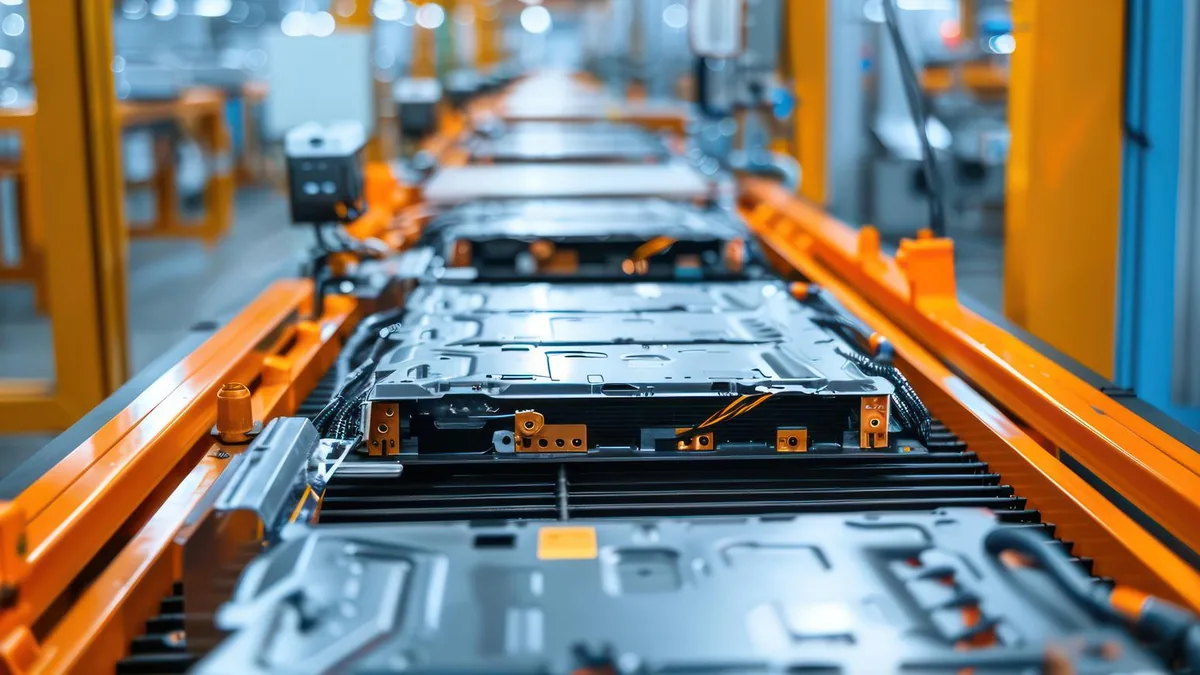
The most powerful tailwind is the LiPF6 supply chain: every kWh of lithium-ion battery requires roughly 0.13 kg of HF, which in turn requires ~0.27 kg of acidspar. With global EV production scaling from 16 million units in 2026 to 38 million by 2032, structural demand for acidspar from this end-market alone increases by 1.4 million tons.
Secondary drivers include fluoropolymer growth (semiconductor processing, 5G dielectrics), pharmaceutical fluorination (35% of new small-molecule drugs contain fluorine), and steel demand recovery in India and Southeast Asia, which sustains metspar volumes.

Restraints & Challenges
Geographic concentration is the dominant risk. China controls ~58% of global production and has progressively tightened export quotas since 2024, fueling price spikes. The EU placed fluorspar on its Critical Raw Materials list in 2023, but domestic production capacity (UK Cavendish Mill, Spanish Asturreta) covers less than 30% of regional demand.
Environmental scrutiny is intensifying: HF manufacturing produces fluorogypsum waste, and PFAS regulation in the EU and U.S. is forcing reformulation of downstream fluorinated products, which could erode 8-12% of acidspar demand in the long term.
Segmentation
By Grade
- Acidspar (=97% CaF2) — 62% of value, used for HF acid production
- Metspar (60-85% CaF2) — 28%, steel flux applications
- Ceramic-grade (95-96%) — 7%, optical and ceramic uses
- Optical-grade (single crystal) — 3%, semiconductor lithography lenses
By Application
- Hydrofluoric acid & downstream fluorochemicals (51%)
- Steel flux (24%)
- Aluminum production (cryolite synthesis) (9%)
- Glass & ceramics (7%)
- Cement & pigments (4%)
- Optics (5%)

Regional Analysis
APAC (61% share, 7.4% CAGR) — China dominates production with deposits in Inner Mongolia and Hunan; Vietnam (Masan High-Tech Materials) is the largest non-Chinese Asian producer.
Europe (15%) — Critical raw material status spurred Spanish (Asturreta) and UK (Cavendish Mill, reopened 2024) production. EU is structurally short and imports from Mexico, South Africa and China.
North America (12%) — Mexico produces from Coahuila and San Luis Potosí (Mexichem/Orbia operations); the U.S. has zero domestic mining since 1995 and depends on Mexican and Vietnamese imports.
LATAM (7%) — Mexico is the dominant regional producer; Brazil consumes ~150 kt/year for steel flux, sourced mainly from China.
MEA (5%) — South Africa (Sallies/Centralfluor) and Morocco have meaningful reserves; Kenya and Namibia are exploration plays.

Competitive Landscape
- Mexichem (Orbia) — World's largest acidspar miner via its Mexican operations; integrated into HF and refrigerants
- China Kings Resources — Top Chinese producer; vertically integrated to fluorochemicals
- Minersa — Spanish producer (Asturreta mine), strategic supplier for EU
- British Fluorspar (Tertiary Minerals/SCR-Sibelco) — Cavendish Mill UK, restarted 2024
- Solvay — Major HF and fluoropolymer producer; backward-integrated via Mexican supply
- Masan High-Tech Materials — Vietnamese tungsten and fluorspar producer (Nui Phao mine)
- Centralfluor Industries / Sallies — South African producer, primarily acidspar exports
Recent Developments
- Q1 2026 — Orbia signed a 7-year acidspar supply contract with Solvay covering 180,000 t/year for fluoropolymer expansion in France
- 2025 — UK Cavendish Mill restarted at 50 kt/year capacity; first commercial output in over a decade
- 2025 — China imposed export quotas reducing acidspar shipments by 14% YoY; spot prices spiked to USD 600/t in Q3
- 2024 — EU Critical Raw Materials Act listed fluorspar; targets 10% domestic mining by 2030
Frequently Asked Questions
What is calcium fluoride used for?
The dominant use (51% of demand) is as feedstock for hydrofluoric acid, which in turn produces refrigerants, fluoropolymers, lithium hexafluorophosphate for EV batteries, and pharmaceutical intermediates. Lower-purity grades are used as steel flux (24%) and in aluminum production (9%).
How big is the calcium fluoride market?
The global market is valued at USD 3.1 billion in 2026 and projected to reach USD 4.6 billion by 2032 at 6.8% CAGR.
Who is the largest producer of fluorspar?
China produces roughly 58% of global fluorspar, mostly from Inner Mongolia and Hunan provinces. Mexico (via Orbia/Mexichem) is the second-largest producer. Other significant producers include Vietnam, South Africa, Spain and the UK.
Why is fluorspar a critical raw material?
Fluorspar is the only economic source of fluorine, which is essential for refrigerants, semiconductor manufacturing, EV battery electrolytes and fluoropolymers. Production is geographically concentrated, with China alone controlling more than half of global supply, leading the EU, U.S., UK and Japan to classify it as a critical raw material.
What is the difference between acidspar and metspar?
Acidspar contains at least 97% calcium fluoride and is used for hydrofluoric acid manufacturing. Metspar (metallurgical-grade) contains 60-85% CaF2 and is used as a flux in steelmaking and aluminum smelting. Acidspar trades at a roughly 3-4x price premium over metspar.
How does EV demand impact fluorspar?
Lithium-ion batteries use lithium hexafluorophosphate (LiPF6) as an electrolyte salt. Each kWh of battery requires approximately 0.13 kg of HF, which needs roughly 0.27 kg of acidspar. The EV transition adds an estimated 1.4 million tons of structural acidspar demand by 2032.
Related reports
Automotive Remote Diagnostics Market Size, Share & Forecast 2026-2032
Automotive remote diagnostics market size is set for robust growth from 2026-2032, driven by connected vehicles, 5G adoption, and OEM telem…
Frozen Potato Market Size, Share & Forecast 2026-2032
The frozen potato market is projected to grow steadily through 2032, driven by QSR expansion, convenience food demand, and cold chain investments.
Sales Engagement Software Market Size, Share & Forecast 2026-2032
14.60 USD bn
Estimated market size in 2032
- 2026
- 5.80 USD bn
- Forecast period
- 2026–2032