Ecommerce: what it is, how its share of retail sales is measured and official figures
Ecommerce is any sale ordered or negotiated online. Census Bureau data put it at 17.9% of US retail sales in the third quarter of 2026; Eurostat counts 78% of EU internet users buying online.
In this article
Ecommerce is the sale of goods and services where the buyer places the order, or the price and terms are negotiated, over the internet or another online system. Payment may or may not happen online. According to the US Census Bureau, ecommerce accounted for 17.9% of US retail sales in the third quarter of 2026.
Key points
- The Census Bureau defines ecommerce by where the order is placed or the sale is negotiated: EDI, the internet, an extranet, email or instant messaging. Payment does not have to be made online.
- US ecommerce sales were $347.3 billion in the third quarter of 2026 (seasonally adjusted), or 17.9% of total retail sales.
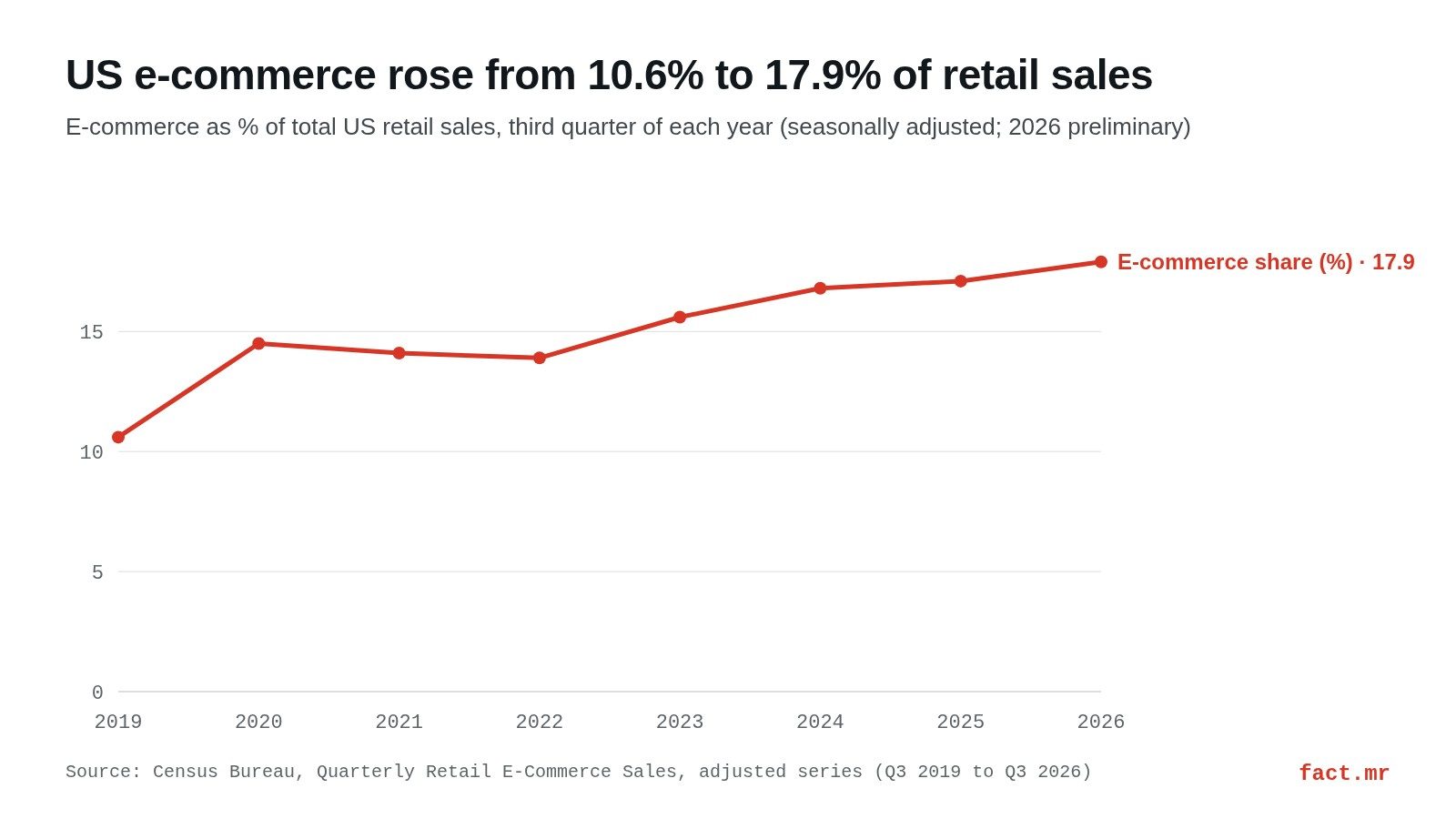
- That share was 10.6% in the third quarter of 2019, 7.3 percentage points lower.
- In the European Union, 78% of internet users bought something online in 2025, according to Eurostat.
- The Census figure is a share of dollars spent and the Eurostat figure is a share of people, so the two can't be compared directly.
What is ecommerce
In the United States, the reference definition comes from the Census Bureau's Monthly Retail Trade program, which produces current estimates of sales at retail and food services stores and of inventories held by retail stores. For the Census Bureau, a sale counts as electronic when the buyer places an order, or the price and terms of sale are negotiated, over Electronic Data Interchange (EDI), the internet or another online system such as an extranet, email or instant messaging. A retailer, in the same glossary, is a business that sells goods in small quantities directly to consumers.
Eurostat, the EU's statistics office, starts from the buyer's side. In its survey of information and communication technology (ICT) use in households, ecommerce means buying goods or services over the internet for private use, from any device, from businesses or from private individuals.
| Source | What counts as ecommerce | Must payment be online? | How it is measured |
|---|---|---|---|
| Census Bureau (US) | Sales ordered or negotiated over EDI, the internet, an extranet, email or instant messaging | No | Current dollars and share of total retail sales |
| Eurostat (EU) | Online purchases for private use, from businesses or private individuals | No | Share of internet users aged 16 to 74 who bought online |
An online order paid in cash at the door counts under both definitions. So does a train ticket bought in an app, the kind of purchase Eurostat tracks: in 2025, 27% of EU internet users bought transport services and 33% subscribed to film, series or sport streaming services.
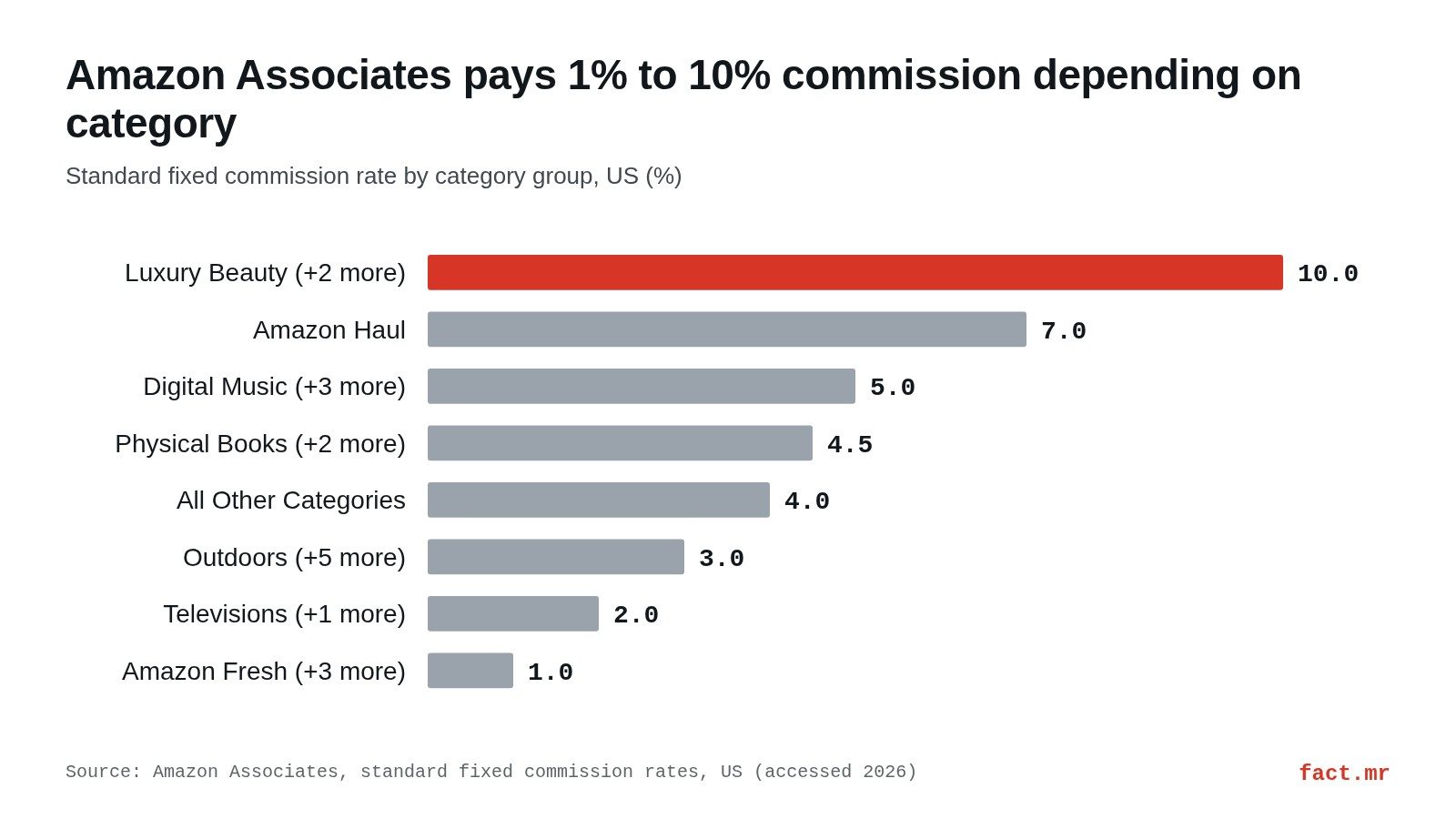
How third-party platforms charge sellers is covered in what is an online marketplace, and where an online store fits in a broader sales plan is covered in what is digital marketing.
How the share of sales is measured
The math is a single division: online sales ÷ total sales × 100. Example: a store with 5,000 in online sales and 20,000 in total sales sells 25% online (made-up round numbers, used only to show the formula).
The Census Bureau applies the same division to all US retail. In the third quarter of 2026, $347.3 billion in online sales against $1,941.9 billion in total sales gives 17.9%. Three details change how that number should be read:
- Seasonality. The headline series is adjusted for seasonal variation. Without that adjustment, the quarter's ecommerce sales were $335.7 billion and the share was 17.2%.
- Prices. All values are in current dollars, with no adjustment for inflation. Some of any growth in sales may simply be higher prices.
- Coverage. Only businesses with paid employees are included. Before the benchmark report released in April 2025, the quarterly estimates also included nonemployers (businesses with no paid staff).
The estimates come from the Monthly Retail Trade Survey and administrative records.
Official figures: US share, third quarter of each year
| Third quarter | Ecommerce as % of total retail sales (seasonally adjusted) |
|---|---|
| 2019 | 10.6% |
| 2020 | 14.5% |
| 2021 | 14.1% |
| 2022 | 13.9% |
| 2023 | 15.6% |
| 2024 | 16.8% |
| 2025 | 17.1% |
| 2026 (preliminary) | 17.9% |
The line isn't straight. The share jumped to 14.5% in 2020, slipped to 13.9% by 2022 and has risen every year since. The 2026 reading sits 7.3 percentage points above 2019 (the Census table gives the numbers, not the reasons).
The latest report came out on Thursday, November 19, 2026. Ecommerce sales grew 10.4% from the third quarter of 2025, from $314,500 million to $347,322 million, while total retail sales rose 5.6%. Compared with the previous quarter, ecommerce gained 1.6% and total retail 1.1%.
European Union: how many people buy online
Eurostat found that in 2025, 95% of people aged 16 to 74 in the EU had used the internet in the previous 12 months, and 78% of those users had bought or ordered something online. In 2015 the share was 62%, a rise of 16 percentage points in 10 years. Men and women bought online at the same rate.
| Age group | Bought online in 2025 (% of internet users) |
|---|---|
| 16-24 | 84% |
| 25-34 | 90% |
| 35-44 | 87% |
| 45-54 | 80% |
| 55-64 | 69% |
| 65-74 | 55% |
And 15% of EU internet users had never bought anything online. Eurostat also reports that 62% bought or ordered within the 3 months before the survey. Among people who bought online in 2025, 63% reported no problems, 20% reported slower delivery than expected and 4% reported issues related to fraud.
The survey drew on about 172 thousand households and 330 thousand individuals, and most countries collected the data in the second quarter of 2025.
Mexico: what INEGI measures
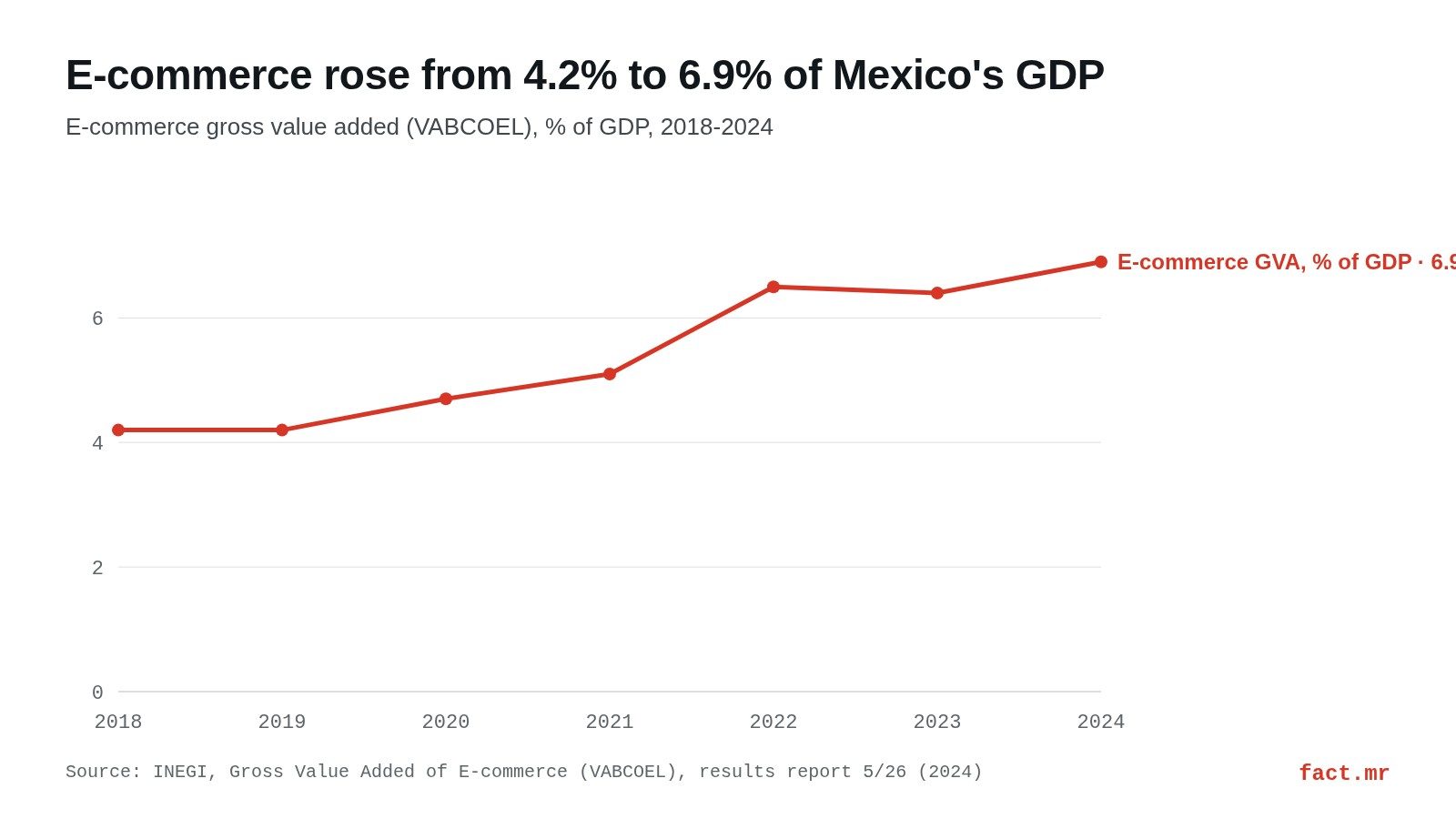
Is there a Mexican figure comparable to the US 17.9%? INEGI's ENDUTIH 2025 press release doesn't give one.
INEGI, Mexico's national statistics office, runs the ENDUTIH, a household survey that since 2015 has asked about equipment, access barriers and technology use at home, including ecommerce and online banking. It counts people and households, not sales.
| Indicator (ENDUTIH, INEGI) | 2015 | 2025 |
|---|---|---|
| Population aged 6 and older that used the internet | 57.4% | 86.1% |
| Households with internet | 39.1% | 78.3% |
Households with internet rose 39.2 percentage points over that decade. In 2025, 84.6% of people aged 6 and older used a cell phone, and only 44.7% of households (17.7 million) had a computer. But access is uneven: 88.9% of the urban population used the internet, against 75.2% in rural areas.
The same survey measures that gap in online transactions. According to INEGI's ENDUTIH 2025 release of June 16, 2026, the urban-rural difference was 21.7 percentage points for internet payments, 20.9 for purchases of goods or services and 20.7 for online banking.
The Mexican Online Sales Association (AMVO), a trade group, publishes its Estudio de Venta Online (Online Sales Study) every March, based on 1,000 interviews conducted with Netquest. The association says the study covers market value and the profile of digital shoppers, but its public page doesn't state the market figure. The public version is a free download, and the extended version is reserved for members. For Mexico's November sales event, see Buen Fin Mexico.
Common mix-ups
Share of sales vs. share of shoppers
The Census 17.9% and the Eurostat 78% measure different things. The first is a slice of the dollars spent at retail; the second is a slice of the people who use the internet. Putting them side by side leads to a false conclusion.
Paying online
Neither definition requires payment over the internet. What matters is where the order was placed or the terms were agreed.
Shopping days
The Census series is quarterly and seasonally adjusted, so it doesn't isolate a single shopping day like Cyber Monday.
Preliminary figures
The 2026 figure is preliminary. The Census Bureau already revised its quarterly ecommerce estimates for historical corrections and for the results of the 2023 and 2024 Annual Integrated Economic Survey, so older numbers quoted elsewhere may not match this table.
Frequently asked questions
What is ecommerce in simple terms?
It is buying or selling something when the order is placed, or the price is agreed, over the internet or another online system. The Census Bureau includes EDI, extranets, email and instant messaging, and says payment may or may not be made online.
How big is ecommerce in the US?
According to the Census Bureau report of November 19, 2026, US ecommerce sales were $347.3 billion in the third quarter of 2026, seasonally adjusted. That was 17.9% of total retail sales and 10.4% more than in the same quarter of 2025.
How many Europeans shop online?
According to Eurostat, 78% of EU internet users bought or ordered goods or services online in 2025, up from 62% in 2015. The 25-34 age group had the highest share, at 90%, and 15% of internet users had never bought online.
Does Mexico publish an ecommerce share of retail sales?
INEGI's ENDUTIH 2025 press release doesn't give one. It shows that 86.1% of people aged 6 and older used the internet and that the urban-rural gap in online purchases was 20.9 percentage points.
Sources
- U.S. Census Bureau, "Quarterly Retail E-Commerce Sales" (third quarter of 2026, released November 19, 2026). Ecommerce and total retail sales, quarterly and annual changes, adjusted and unadjusted shares, and revision notice. census.gov. Accessed Nov 25, 2026.
- U.S. Census Bureau, "tsadjustedsales.xlsx" (seasonally adjusted quarterly series, third quarter of 2026 edition). Ecommerce share by quarter from 2019 to 2026, third-quarter 2025 sales, coverage and price treatment. census.gov. Accessed Nov 25, 2026.
- U.S. Census Bureau, "Monthly Retail Trade - Definitions". Definitions of ecommerce and retailer, payment condition and current-dollar values. census.gov. Accessed Nov 25, 2026.
- Eurostat, "E-commerce statistics for individuals" (edition with 2025 data). Internet use, online shoppers by age and sex, problems when buying, definition and survey sample. ec.europa.eu. Accessed Nov 25, 2026.
- INEGI, "Encuesta Nacional sobre Disponibilidad y Uso de Tecnologías de la Información en los Hogares (ENDUTIH) 2025", press release (June 16, 2026). Internet users, households with internet and computers, cell phone use and urban-rural gaps. inegi.org.mx. Accessed Nov 25, 2026.
- Asociación Mexicana de Venta Online (AMVO), "Estudios" (Estudio de Venta Online 2026). Publication month, sample, scope and access to the study. amvo.org.mx. Accessed Nov 25, 2026.
Chart: our own, with data from Census Bureau (source 2).
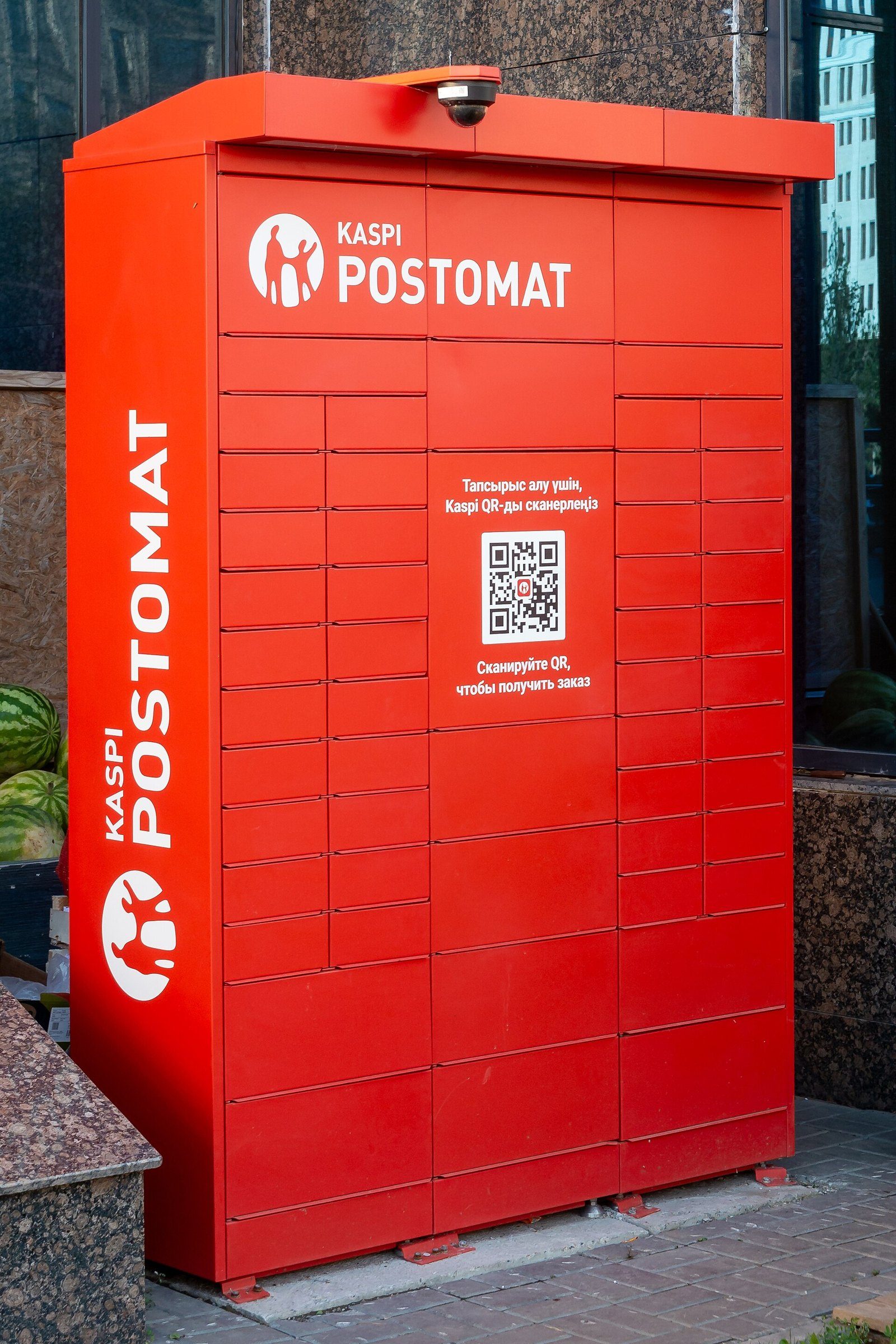
Photo: Matti Blume (CC BY-SA 4.0, Wikimedia Commons).
fact.mr is not affiliated with consulting firms with similar names.
Found an error? Write to us at [email protected].
Related

What is digital marketing: the main channels, how search works and ad revenue by channel
What is an online marketplace: how it works, how it charges sellers and figures